 |
 |
 |
 |
Government Leader home > news stories
 10/11/06
 Bruce James leads GPO into the 21st century—and financial stability
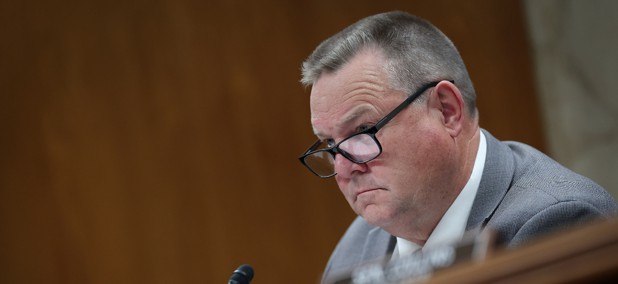
 By Richard W. Walker Government Leader Staff

In 2002, the Government Printing Office was hemorrhaging red ink. The agency had lost about $100 million over the previous five years. Its technology infrastructure was more mid-20th century than 21st, its management configuration manifestly late Victorian.

Congress, which oversees GPO, was not pleased.

Along came Bruce James. A veteran of the private-sector printing industry, James came out of retirement four years ago to become the public printer and lead GPO. He took the reins and quickly got down to business.

By 2004, GPO had turned its losses into an $11 million gain, streamlined its management structure and laid plans to transform the agency from an old-fashioned printing shop into a modern, digital information organization.

The first action James took was to stanch the flow of red ink by carefully pruning GPOs workforce by nearly 30 percent. Many workers had been about to retire, others took early retirement.

It was done in cooperation with the unions and Congress, so we were able to give folks a graceful exit, James said. There was no acrimony in any way.

But it was the formulation of a strategic plan that was critical to improving GPOs long-term fortunes, James said.

So many agencies, including GPO, were sort of floating along on this ocean to see where the waves would take them, he said. I felt that, if we were going to change the culture, we really had to have a point in the future that we aimed for.

To construct the strategic vision, officials consulted with representatives of GPOs multiplicity of stakeholders, including Congress, government publishing agencies, the printing industry, libraries, and GPO employees and unions. The result was a vision for the future that was supported across GPOs constituencies.
James also revamped GPOs management structure, a move central to realizing the agencys vision for the future.

When I came in, there were 39 people reporting directly to the public printer, he said. This assured that nothing ever would happen.

James scrapped GPOs top-heavy management edifice and replaced it with a sleek, corporate-style arrangement that designated a chief executive officer (James), a chief operating officer, and chief executives to manage the finance, information and human capital pieces of GPO.

We completely collapsed and flattened structure, he said. That was designed to speed decision-making. We also assigned responsibility and accountability, which is so darn important if you want something to happen. Anybody whos at the top layer of the organization chart has to have a clear set of responsibilities, be on a performance plan and know exactly what is expected of them.

James also created an Office of Innovation and New Technology, separate from the CIOs office, to develop a digital information system that will serve as the core of GPOs future operations.

Earlier this year, GPO awarded a two-year, $29 million contract to Harris Corp. of Melbourne, Fla., to build the agencys Future Digital System, which will transform the way GPO collects, stores and shares federal documents. Using the system, GPO expects to digitize and make available through a Web portal nearly every federal document published since the nation was founded.

James said GPO expects to begin rolling out the system in phases next year, until it reaches full functionality by the end of 2008.

The biggest barrier to moving GPO into the digital age was changing the way people thought about the agency, James said.

When I arrived at GPO, what we had was an attitude problem, he said. Our sister agencies and the rest of government, the library community and even our own employees thought GPO was an antiquated, 19th-century, heavy-metal, print-centric organization.

Things are different now. I dont think anybody is left with that attitude, certainly no one who has done business with GPO [in recent years], James said.

GPOs chief hurdle ahead relates to bricks and mortar. The agencys headquarters buildings in Washington, which date to the early 1900s, are too large and ill-configured for its current needs.

The existing [headquarters] is eating us alive, James said. Trying to work with Congress to make [a move] happen will be the biggest challenge of my successor, and it has to happen.

James earlier this year announced his intention to retire from GPO when a new public printer is chosen. After leaving GPO, he will continue his work in higher educationa long-standing interestserving on the boards of organizations such as the Associated Governing Boards of Colleges and Universities.

My goal is to see if we can find a new model for higher education in the 21st century, because the existing one is too expensive and it gets more expensive each year, he said. Its unsustainable. So we have to find how to embrace technology, just as industry did in the 1980s. We have to figure out how do that in higher education to begin to bring the costs within reason.

I hope to play a leadership role in that, he said.


|
|
 |  |
 |
| This story was originally published in Government Leader's sister publication, Government Computer News, as part of the 2006 GCN awards.

| |
 | |  |  |  |
 |  |  |
 | GCN Civilian executive of the year: Bruce James, U.S. public printer and Government Printing Office CEO |
 |  |  |


|